Spaced repetition is a powerful learning technique that can help language learners efficiently acquire and retain new vocabulary. By leveraging the principles of cognitive science, spaced repetition optimizes the learning process, making it easier to commit new words to long-term memory and recall them when needed.
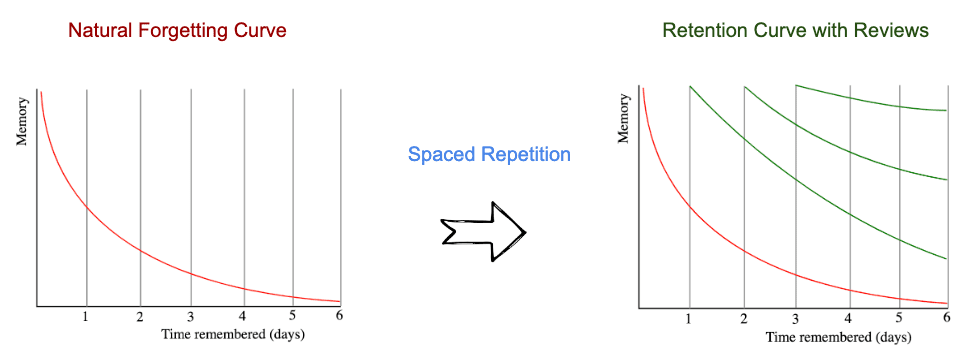
In the 19th century, German psychologist Hermann Ebbinghaus discovered the forgetting curve, which shows how quickly we forget newly learned information if we don't review it. He found that the rate of forgetting is highest immediately after learning, but slows down over time. By reviewing information at the right moments, just as it starts to fade from memory, we can interrupt the forgetting process and reinforce long-term retention. Spaced repetition takes advantage of this phenomenon by scheduling review sessions at increasing intervals, with the goal of committing information to long-term memory.

Contemporary research has supplemented Ebbinghaus's work with the method of active recall. Dr. Barbara Oakley explains in her book Learning How to Learn that active recall is the process of actively trying to remember a piece of information, such as a word or concept, without looking at the answer. This process strengthens the neural pathways associated with that information, making it easier to recall in the future. In other words, recall > review.
Combining these two scientific principles, spaced repetition and active recall, modern spaced repetition systems (SRS) are designed to optimize learning and retain information for various subjects, including language learning.
As shown below, ReadLearner offers a spaced repetition flashcard system that helps you remember new vocabulary more effectively. Our system differs from popular flashcard apps like Anki and Memrise in one key aspect: the flashcards are generated from the words you encounter while reading when you click the Star icon. This way, you can learn vocabulary in context, which has been shown to be more effective than learning words in isolation.
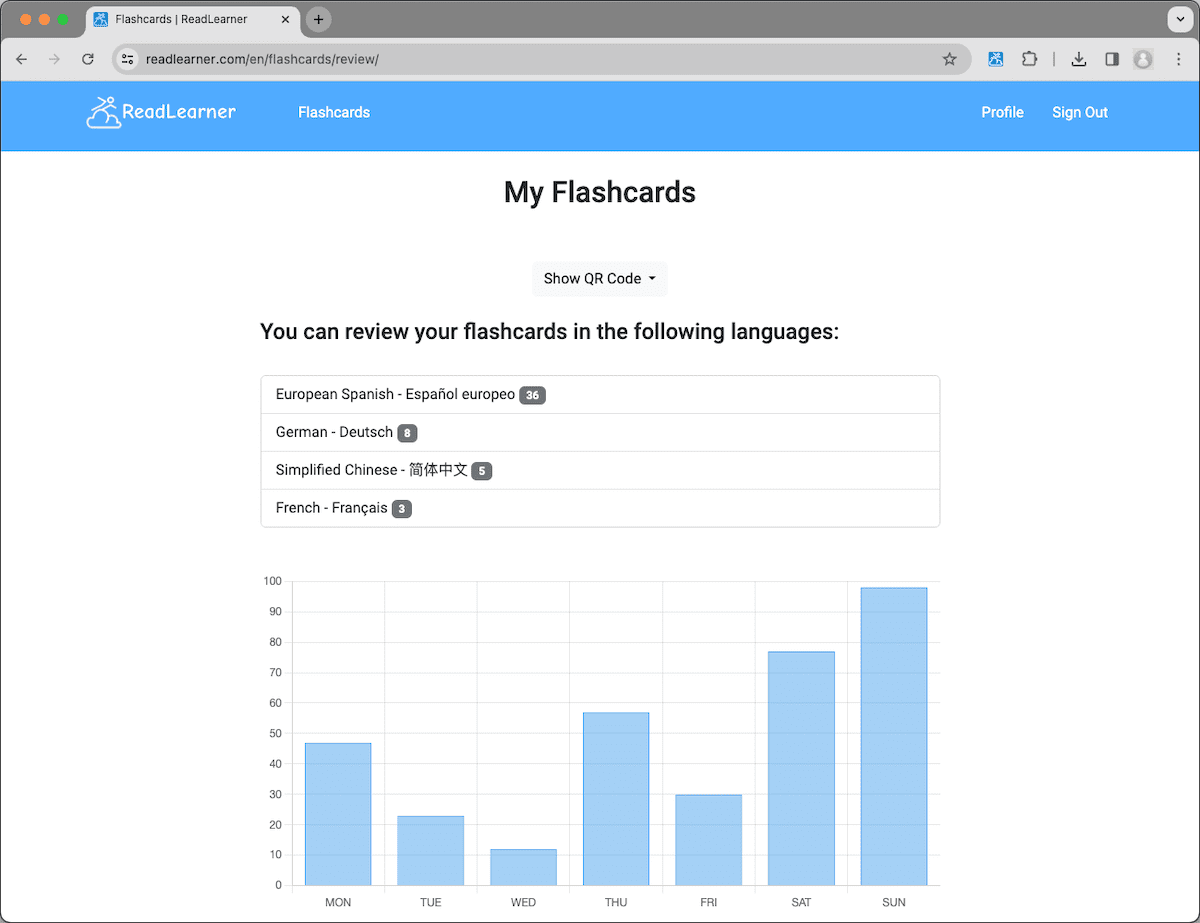
In terms of scheduling, the ReadLearner flashcard algorithm is based on your familiarity with each word. Words you struggle to recall will appear more frequently, while words you know well will be spaced out over longer intervals. This adaptive approach ensures that you spend more time on challenging words and less time on words you already know, maximizing the efficiency and enjoyment of your study sessions.
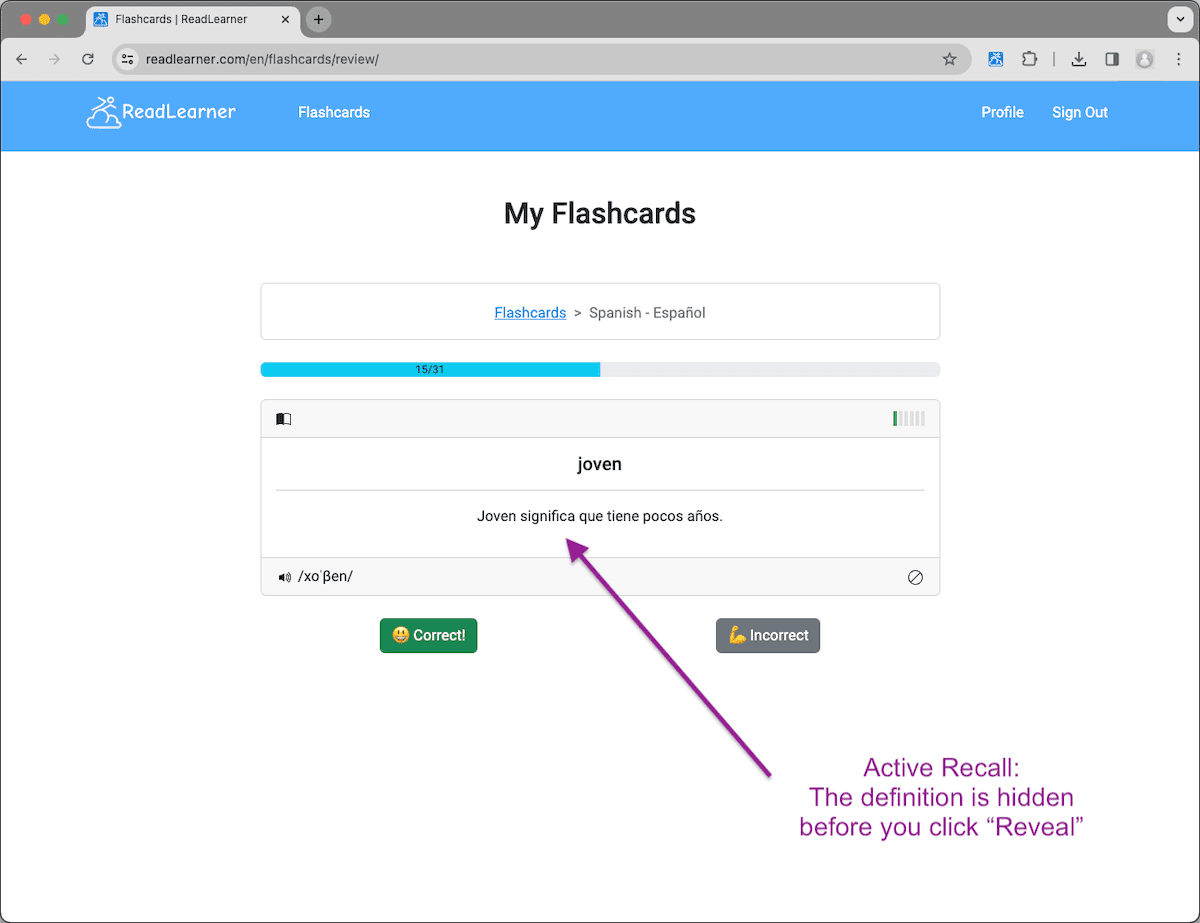
In terms of card types, ReadLearner allows you to choose between a variety of flashcard formats, including define, reverse define, cloze (fill-in-the-blank), and translate. This variety keeps your study sessions engaging and helps you multiple neural pathways for each word.
In fact, ReadLearner is designed to be your langauge learning AI Copilot. It has many other features in addition to the spaced repetition flashcards, such as contextual popovers, learner's dictionaries, and AI tutor.
Sign up today and start learning your dream language with the best tools available!